Market First or Museum First? Two Ways to Begin a City Day
Market first or museum first? Choose a city-day opening that fits your energy, interests, and schedule, then give the rest of the day room to unfold.
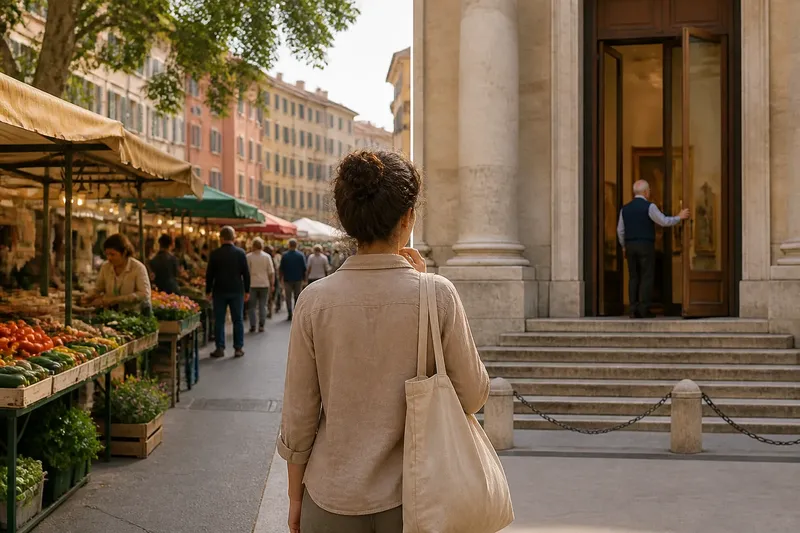
You reach the square as a market vendor lifts a canvas flap; across town, a museum guard unlocks a quiet gallery. Market first or museum first is not only a question of which door opens sooner. The first stop sets the pace and kind of attention you bring to the city.
A market begins with movement, voices, and decisions made in the moment. A museum starts with a selected collection and a route through it. Neither is automatically the better introduction. Choose the one that fits what you want from the day, the local schedule, and how much structure feels right.
Two kinds of attention
At a market, attention moves outward. You notice what is being sold, how people use the space, which stalls draw a queue, and how the sounds change from one aisle to another. Some details appear only briefly: a vendor packing up, a delivery being wheeled through, or a food counter switching from breakfast to lunch.
A museum directs attention inward, toward objects, rooms, labels, and connections between them. You can pause over one display, skip another, and return to a work that stayed with you. That concentrated setting can make a city’s history or art easier to follow, especially if you arrive before the galleries feel busy.
Think of the difference as choosing between an open notebook and a carefully edited page. The market offers many small clues at once; the museum gathers particular clues into a sequence. Both can tell you something about the place, but they ask you to notice in different ways.
Market first
Begin at a market if you want a loose, sensory opening and are comfortable letting small discoveries shape your route. A produce hall, fish market, covered arcade, or neighborhood farmers market can show how residents shop, eat, and move through a shared space. If you want to observe ordinary routines, look for a market that serves local daily life rather than one designed mainly for visitors.
Timing matters. Some stalls may be busiest early, while others become lively closer to lunch; opening hours, delivery patterns, and market days differ by place. Check the market’s current schedule before building the morning around it, and note whether the site has several entrances or separate halls.
Leave room for the unpredictable without turning every interaction into a performance for your itinerary. You might browse a bakery counter, ask what a local ingredient is called, or watch how shoppers carry their purchases. If you buy food, follow posted rules about eating areas and avoid blocking a stall while deciding.
A market can make later sightseeing feel more grounded. A familiar ingredient may turn up on a restaurant menu; a craft material may reappear in a shop window. Treat these as observations, not a complete portrait of a city. One lively market reflects its own neighborhood, vendors, and trading habits—not every part of local life.
Museum first
Choose a museum opening if you want a defined starting point and a quieter stretch of focused looking. This works especially well when the collection is central to your interest, the museum has timed entry, or a special exhibition is available only at a particular hour. A reserved entry time can anchor the day, so decide how long you are willing to spend there before adding other plans.
Before you go, review the museum map and identify one or two rooms you most want to see. This is not a demand to follow a strict route. It protects the objects or themes you care about if you lose energy, encounter a crowd, or decide to linger.
Read labels selectively. A museum visit can become tiring if you try to absorb every caption, so choose a few pieces that hold your attention and let the rest remain part of the setting. Notice how the collection is arranged: by period, medium, geography, or another logic. The display itself can reveal what questions the institution wants visitors to consider.
After a museum, a walk through nearby streets or a meal in the surrounding district can provide a change of pace. Keep that transition simple. You may be ready to talk through what you saw, or you may prefer a quiet café and a little time before the next destination.
Choosing your opening?
Which start suits a low-energy morning?
A museum may be easier if you want a defined entrance, places to sit, and fewer choices at the outset. A market may feel better if a gentle walk and casual browsing help you wake up, but its noise and crowds can be tiring.
What if the market is busiest early?
Go there first if its early hours are part of what makes the visit worthwhile, then leave the museum for later. If the museum has a timed ticket or a limited exhibition window, reverse the order and accept that the market may feel different at another time.
Can both fit in one day?
Yes, if you give one a clear priority and keep the other visit modest. A short market browse followed by a focused museum visit, or a museum morning followed by a nearby market lunch, is often more satisfying than trying to cover every stall and gallery.
What if the weather changes?
A covered market or indoor museum can offer shelter, but their locations and access differ. Check the route between them and have a nearby alternative, such as a café or another indoor public space, rather than assuming the whole day must follow the original plan.
Build a flexible day
Decide what you want the opening to do. If it should offer a sense of daily rhythm, start where people are shopping and working. If you want context, a focused subject, or a calmer first hour, begin with the collection. This distinction is more useful than choosing based on which attraction sounds more impressive.
Check the practical details that can change the experience:
- Opening times: Check the market day and museum entry hours. If one has a narrower opening window, visit it first; otherwise, choose the order that best suits your preferred pace.
- Travel between stops: Check walking routes and transit connections. If the second stop requires a long or complicated transfer, choose a closer alternative or give that journey more room.
- Energy and noise: Consider whether you want conversation and movement or quiet concentration at the beginning. If noise sounds tiring, start at the museum; if a quiet gallery feels too demanding, begin with a casual market stroll.
- Food and breaks: Check where you can sit, eat, or refill water. If the market has a suitable place to pause, use it for a break; if not, identify a nearby café before you set out.
- One priority: Pick a stall, market hall, gallery, or exhibition you would regret missing. If it has a narrow time window, build the schedule around it; otherwise, keep it as a flexible destination.
- Room to change plans: Identify a nearby walk or café. If a crowd or lively market makes you want to stay, use that option to simplify the next stop; if the first visit feels complete, continue with the original plan.
Say you have a museum ticket for late morning and a food market across the river. For this invented situation, suppose the market’s posted schedule says its fresh-produce stalls close before the museum entry time, while the museum ticket is fixed. First, check the route and see that visiting the market beforehand still leaves a direct trip to the museum. Next, choose one market hall rather than trying to browse every stall, then leave in time to reach the reserved entry. The resulting plan preserves access to the produce stalls and the museum, but trades an unhurried market visit for a focused one. If the route check instead shows that crossing the river would put the ticket at risk, start with the museum and accept that some stalls may be closed afterward.
Read the transition
The first stop affects how the second one feels. A market can leave you alert to textures, ingredients, and voices; a museum can give you a theme to carry into the streets. Use that effect as a bridge rather than expecting each place to provide a complete experience on its own.
After the market, ask what you noticed that you might look for again: a material, a food, or a pattern of use. After the museum, consider which part of the collection you want to connect with the city outside. A short walk between stops gives those observations space to settle.
Market first or museum first comes down to the opening you want, not a universal ranking of attractions. Choose the stop whose timing and atmosphere suit your morning, and let the other one respond to it. Before leaving your hotel or rental, check one current detail—today’s opening hours, a ticket time, or a market-day notice—so your market first or museum first plan begins with a real option rather than an assumption.